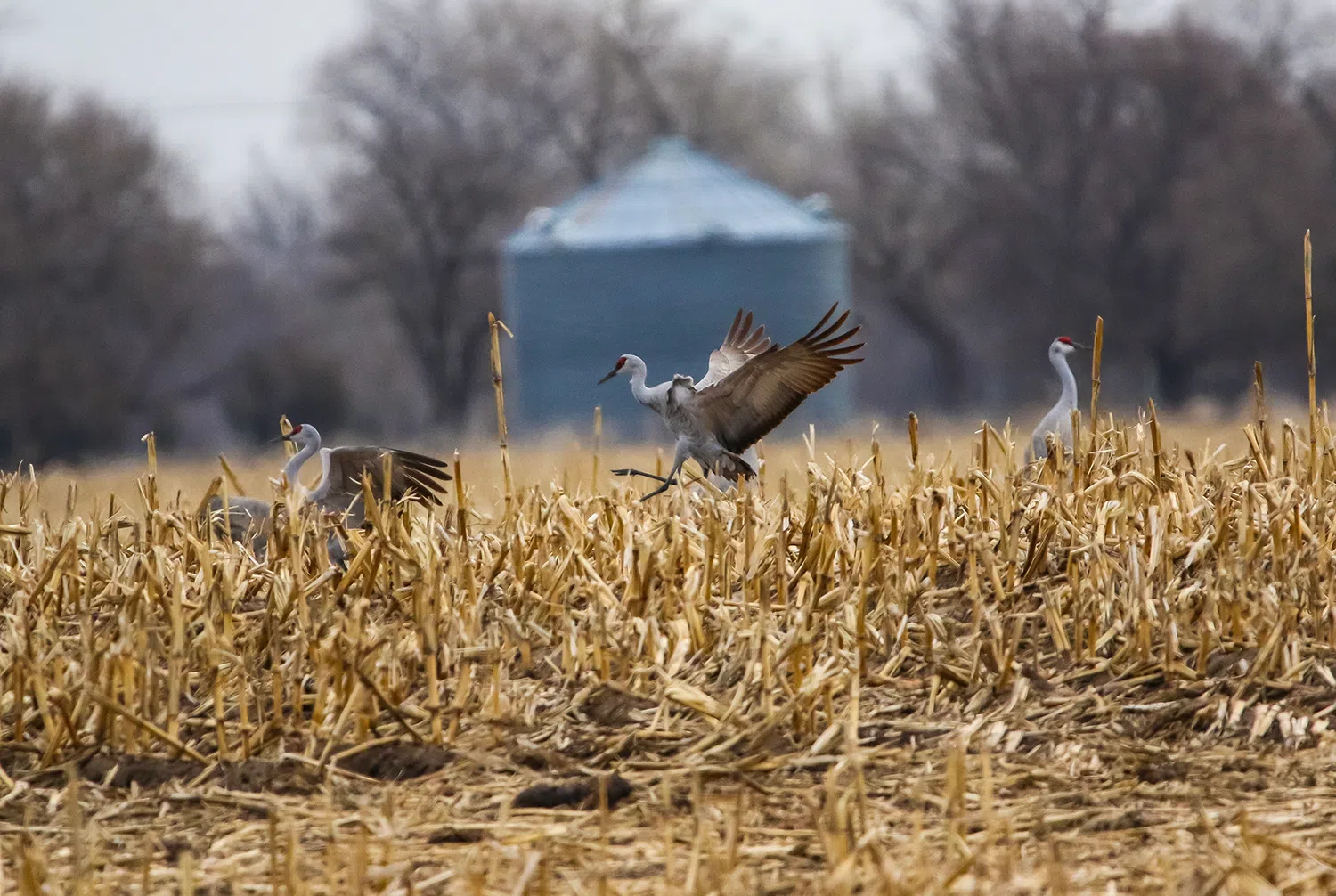
A sandhill crane landing in a corn field near Rowe Sanctuary, (Brian Neben, Central Nebraska Today)
KEARNEY — It’s that time of year again—sandhill cranes are making their incredible migration, and we’re lucky to witness this breathtaking spectacle, the Buffalo County Sheriff’s Office states.
Whether you’re a seasoned birdwatcher or a first-time visitor, here are some essential tips to keep both you and the cranes safe:
- Do not park or stand on bridges—it’s illegal and creates traffic hazards.
- Stay at least 200-300 yards away to avoid disturbing the birds.
- Move quietly and avoid sudden movements.
- Use binoculars or a spotting scope for a better view.
- Avoid flash photography, especially at dawn and dusk.
- Stay in designated viewing areas and respect private property.
- Be cautious on roadways—pull over safely if stopping.
“The Kearney area has multiple options for public viewing, designated areas are provided for different times of the day. Pull-offs offer opportunities for day-time viewing while cranes are as in the fields, while the Plautz Viewing Platform and Fort Kearny Bridge, spanning the Platte River, offer perfect sunrise and sunset viewing,” according to the Visit Kearney website.
“The Platte River Valley is the most important stopover on this migration. The river provides the perfect spot to rest, and the nearby farmlands and wet meadows offer an abundance of food. Without the energy gained along the Platte, cranes might arrive at their breeding grounds in a weakened condition — where food may be limited until the spring growing season begins,” Visit Kearney’s website states.
“The Platte River region has a variety of habitats that support cranes. The most important is the Platte River itself. The river is very shallow and sandbars dot the channels. It is here the cranes rest at night, gaining protection from predators like coyotes,” per Visit Kearney.
The spring migration population of sandhill cranes in the Central Nebraska Flyway is estimated at 650,000.
- Height — 3 to 4 feet
- Wingspan — 6 feet
- Weight — 8 to 12 pounds
- Color — Gray
- Migration — 170 to 450 miles/day
- Flight Speed — 38 mph
- Mating — Begins at age 3 to 4
- Eggs — 2 per year