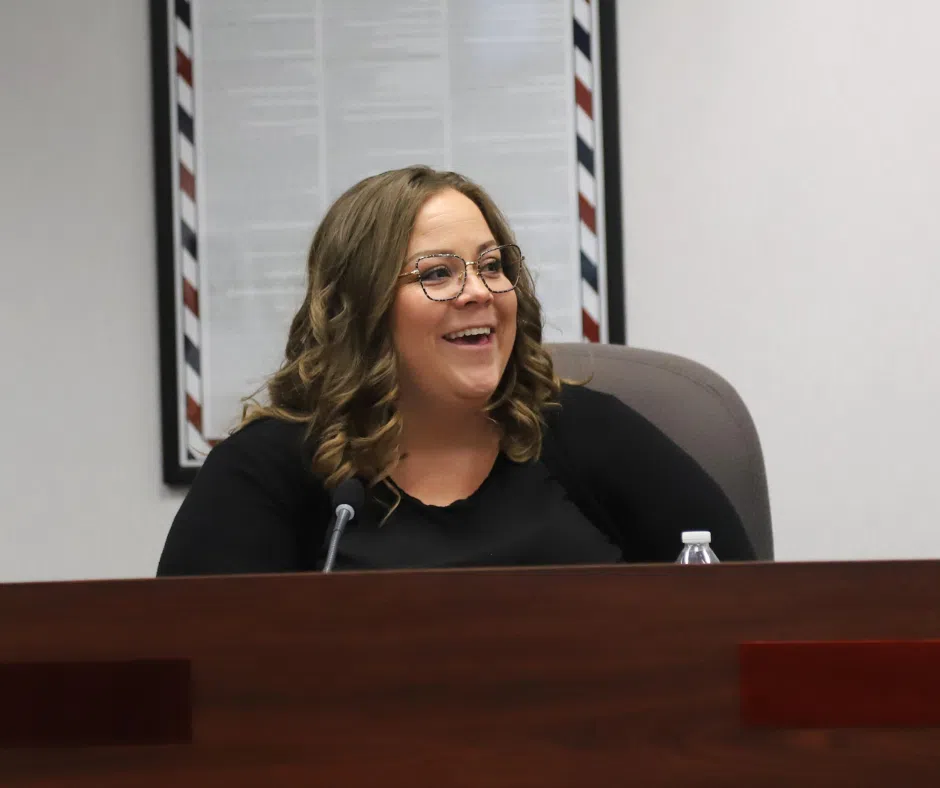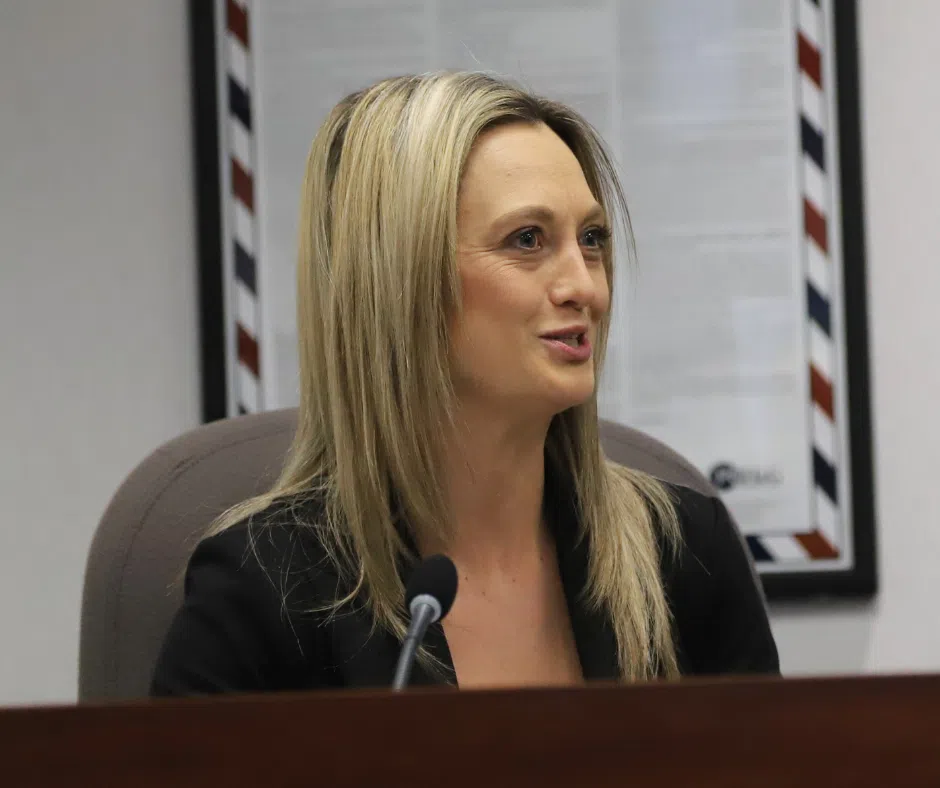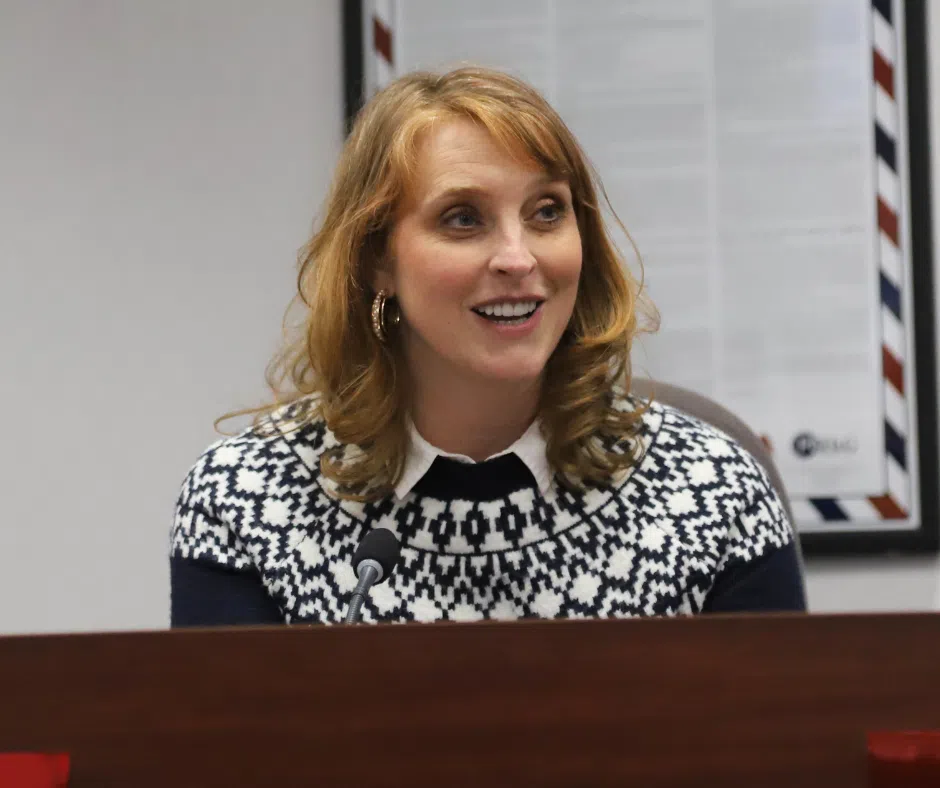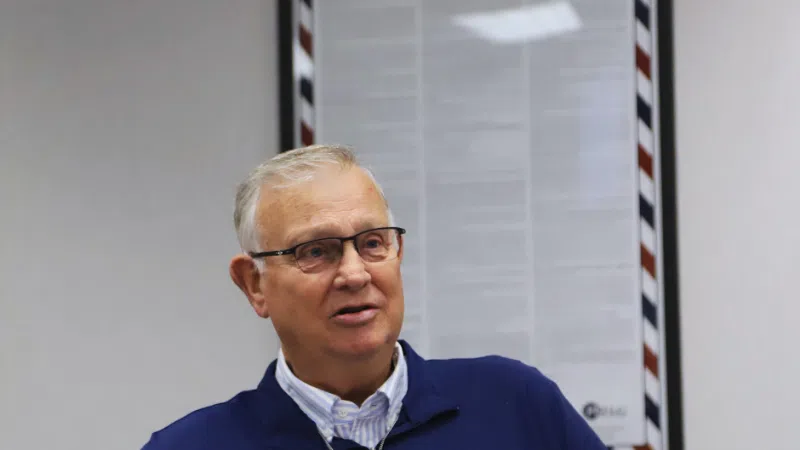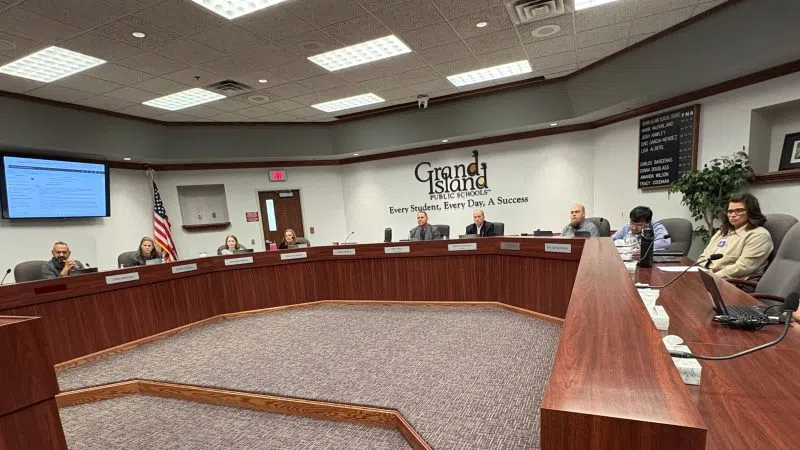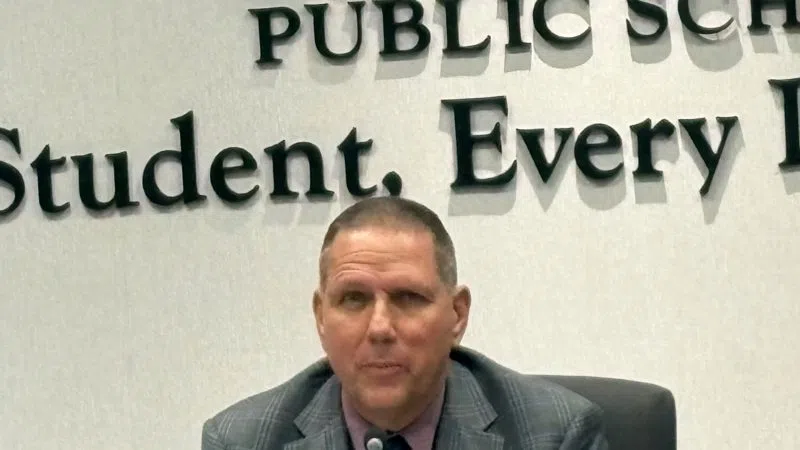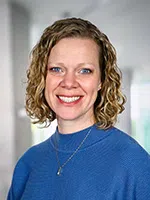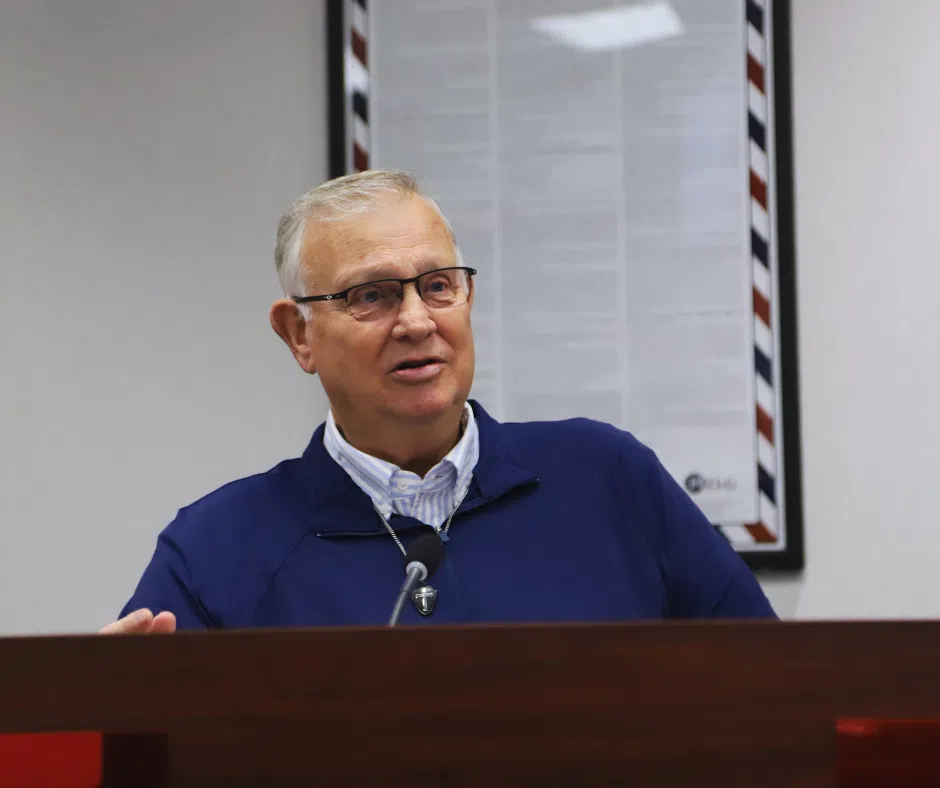
The Grand Island Public Schools Board of Education appointed Dr. Kent Mann Feb. 12 to fill a vacant position on the Board. (Courtesy photo)
GRAND ISLAND – The eight current members of the Grand Island Public Schools Board of Education interviewed four candidates Feb. 12 to fill a vacancy for the ninth position on the Board.
The four candidates who were interviewed were Amber Harper, Dr. Sarah Loudy, Dr. Kent Mann, and Ralae Noorlander.
After interviews lasting close to two hours, the Board eventually unanimously selected Mann to be the new Board of Education member.
Amber Harper serves as a Network Service Coordinator at the Nebraska Coalition to End Sexual and Domestic Violence. Dr. Sarah Loudy is a Biological Sciences Instructor at Central Community College. Mann is a retired educator who most recently served as principal at Grand Island Senior High School until 2011. Noorlander has worked in Grand Island Public Schools as a substitute teacher.
Mann said his vision for the school district was to continue to follow the mantra of “Every Student, Every Day, a Success.” He wanted to see a safe and orderly learning environment provided for students. He said he would like to see the school district “Just a little bit better than we are now. Decisions need to be made with students in mind.
Mann said that he has worked with Board of Education groups in a number of capacities. In the Educational Administration Department at the University of Nebraska-Lincoln, he taught classes on “boardsmanship.” He could share that expertise with the Grand Island Board. He used the analogy of school district board and staff members functioning in a multiple-lane highway. He said “everything runs really well if everyone stays in their lanes.” He said he had significant experience working with school boards during his 44-year career in education.
He explained what role that policy has in the function of the Board. He said that Board members determine procedures that help the school district to function. Within policies, administrators can be creative, but need to have guidelines. He said that one of the key foundations of a functional district is having good goals.
Mann explained what he saw as the Board’s roles and responsibilities. First, the Board is responsible for setting policy. Next, the Board works collaboratively with the superintendent and administration. The Board needs to develop components to more toward achievable goals.
Mann talked about current challenges facing education/school boards.
“You’re never going to run out of challenges,” he said. The school district has changing demographics and a growing student enrollment. Facing budget issues is an ongoing process. Concerning spending, “You only get to spend it once.”
Mann compared constructing school buildings to constructing a garage. The building will never be big enough. Recruitment and retention of teachers is extremely important. He said that more teachers are retiring from school districts compared to the number of people entering the profession.
“Recruitment is going to be huge,” he said.
He said in the last five to seven years, there has been a trend for first-year teachers of 30 percent to 40 percent of them not returning for the second year.
Mann was asked how he would handle a request or concern, if approached, by an individual or special interest group. He said that an individual Board member cannot speak for the entire Board. He said that concerns need to be addressed starting at the classroom level. If that is not satisfactory, the issue then needs to be considered by the principal, then the superintendent, before reaching the Board of Education. He described the chain of command as “almost sacred.” He said it is important to listen to a concern and be objective.
Mann referenced the book “The Seven Habits of Highly Effective People” by Stephen Covey. He said there are two spheres: a circle of concern and a narrower circle of urgency. People need to ask whether an issue is a concern or something urgent.
Mann was asked if he would support a Board decision that he did not vote to approve. He said it was important to have 100 percent support of a decision.
He was asked if he could remain nonpartisan in his role on the Board. He said that partisanship has become a major component in society.
“I don’t think that’s a really good thing,” Mann said. Board members need to consider whether an issue is good for students and staff.
Finally, Mann said that he would run for election for the Board to continue after the appointed term expires on Dec. 31, 2026.
Amber Harper said she was a survivor of child sexual assault and human trafficking. She started using controlled substances when she was in college, then completed treatment for that. She said she has served as a volunteer for 12-step programs and the Grand Island Coalition on Human Trafficking. She said she was a fan of the Board’s strategic plan. She has children who have attended preschool, elementary school, and middle school in the district.
She said she had her life experiences to prepare her to serve on the Board. She described herself as a student will all of the potential. She said a concern was having adequate resources to support Board policy. Harper listed Board roles as including setting policy, supervising the superintendent, and assisting with the budget. Harper said that one challenge that school boards face is having adequate resources to be successful.
Harper said that if an individual or group approached her with a concern about the school district, she would share that information with the rest of the Board. She said that even if she did not vote in favor of a motion, she would support the Board as a team. Concerning nonpartisanship for a Board member, Harper said she is registered as an independent. She said her concern is about the wellbeing of students. When asked if she would file for election after the appointed term ends Dec. 31, 2026, she said she had about 65 percent interest in running.
Dr. Sarah Loudy said she has lived in Grand Island most of her life. She attended District 1R School and Palmer High School, living in a rural area because her father was a farmer. She attended the University of Nebraska-Kearney and earned a master’s degree at Hastings College. She has experience as a substitute teacher in the school district. In her current job at Central Community College, she teaches a lot of biology classes.
In her vision for the school district, she said that student demographics present some challenges. There are language barriers and socioeconomic barriers. She said a number of things have prepared her for a potential position on the Board. She has served on the Central Community College Cabinet and is well-versed in curriculum development. She said that the school board is responsible for reviewing policy. Concerning a Board member’s role, she said she wanted to get a feel for what the community desired. For challenges facing education and school boards, she said that Board members need to be open minded and represent the community.
Loudy said that if an individual or group approached her with a concern about the school district, she would share that information with others and noted it was inappropriate for an individual Board member to make a decision.
Loudy said that even if she did not support a motion approved by the Board, “it’s important that we have each other’s backs and work together as a team.” Loudy said that she would not have political party loyalty as a Board member. She said that after the term for the appointed position expired on Dec. 31, 2026, she would seek election for the next term.
Ralae Noorlander said that she was from Utah and that she and her husband and family have lived in Grand Island for the last 18 years. She and her husband have five children that range in age from 9 to 22. She said that after her youngest child began attending kindergarten, she began working as a substitute teacher. Noorlander said that the future of the school district was bright. She described what skills she had to prepare her to serve as a Board member. She said that as a mother of five children, she has perspective. She has gained experience by working as a substitute teacher.
Noorlander said that policy is the “foundation” of the Board. Responsibilities of a Board member include hiring a superintendent, developing policies, and monitoring the performance of the superintendent. She said that challenges facing education and school boards include funding, class size, and a shortage of teachers.
She said that if an individual or group approached her with a concern, she would listen and ask questions. She would encourage people to follow a chain of command by first going to a teacher, then principal, then district administration, then the superintendent, and finally, the Board of Education.
She said she would “absolutely” support a Board decision even if she did not vote in favor of the motion. She said she could respond in a nonpartisan way if she served on the school board. When asked if she would run for election after the appointed term ends on Dec. 31, 2026, Noorlander said she would not file for election. She said that decision could change.