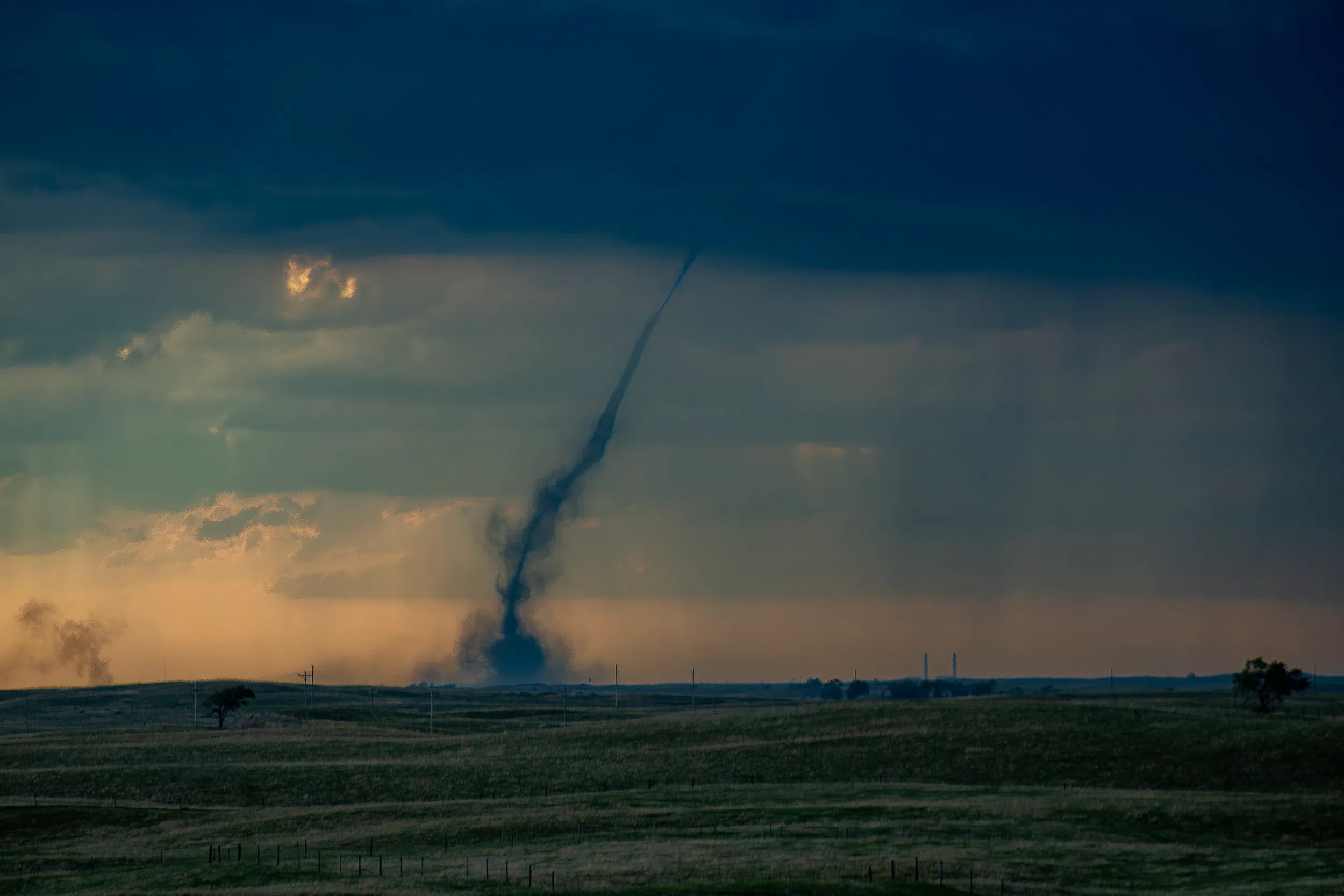
A landspout tornado ongoing near Hershey during the evening of Wednesday, May 14, (Brian Neben, Courtesy)
HASTINGS — The National Weather Service – Hastings announced their SKYWARN storm spotter training schedule for the spring of 2026.
The National Weather Service SKYWARN storm spotter training classes are the place to become more informed about a number of severe weather topics.
“Relaying accurate information effectively is critical during severe weather. Therefore, we feel that it is important to attend spotter training in person to optimize this process,” NWS Hastings stated.
The start times for the classes are at 6:30 p.m. and each training lasts around two hours. They are free and open to the public with ages 10 years and older likely to get the most out of the trainings.
The classes are scheduled in collaboration with local emergency management officials. Residents may attend a class at any location, offered by any NWS office, regardless of where they live.
Class times across central Nebraska includes:
- March 4, Hamilton County, Aurora, Fire Station, 906 13th St., 7 p.m. start
- March 5, York County, York, York County Fairgrounds, 2400 N. Lincoln Ave.
- March 10, Phelps County, Holdrege, Law Enforcement Center, 813 5th Ave.
- March 12, Nuckolls County, Superior, Fire Station, 154 W. 5th St.
- March 16, Sherman County, Loup City, Fire Station, 134 S. 8th St.
- March 17, Gosper County, Elwood, Fire Station, 507 Ripley St.
- March 19, Franklin County, Campbell, Fire Station, 710 Broad St.
- March 23, Harlan County, Alma, Johnson Center, 509 W. Main St.
- March 23, Nance County, Genoa, Fire Station, 517 Willard Ave.
- March 24, Furnas County, Arapahoe, Fire Station, 604 Locust St.
- March 24, Valley County, Ord, Fire Station, 1628 M. St.
- March 25, Hall County, Grand Island, Hall County Communications Center, 1210 N. North Road
- March 25, Clay County, Clay Center, Clay County Fairgrounds, 710 N. Martin.
- March 26, Buffalo County, Pleasanton, Fire Station, 911 N. Pine St.
- April 1, Adams County, Hastings, Emergency Management Office, 2965 S. Baltimore Ave.
- April 15, Kearney County, Minden, Fire Station, 325 N. Colorado Ave.
- April 15, Dawson County, Cozad, Wilson Public Library, 910 Meridian Ave.
It was noted that no spotter talks are scheduled for Osbourne, Merrick and Fillmore counties this year.
“Virtually every community has some form of spotter network. Often, local fire and police personnel are trained to observe and report severe weather, partly due to their extensive radio communication and 24-hour operations,” NWS Hastings states.
“Spotters provide this real-time ground-truth of local conditions — such as hail size, wind speed, tornado development, and local damage — to help warn the public. Even as new technology allows the National Weather Service to issue warnings with greater lead time, spotters will always serve as a critical link between radar indications of severe weather and what’s happening on the ground,” per NWS Hastings.
Providing an accurate report is crucial so NWS offices can provide timely reports that have credibility in the minds of residents.
The most important factors in a report include what the spotter is seeing, where they saw it and when. Other details including duration, direction of travel and damage are also important.
Events that NWS offices need to know about include tornadoes, wall clouds, funnel clouds, hail of all sizes, wind speeds, damage and flooding.
When reporting a tornado, wall cloud or funnel cloud, report if there is visible rotation.
Reporting hail sizes come with some caveats, when making a report don’t reference the size of the hail to items that can change in size, such as marbles. Report hail in reference to coins, sports balls or citrus fruits. Make sure to report the time, size, duration and location of hail.
Hail up to one inch, or quarter sized, is considered severe.
Reporting wind speeds can be tricky and often people report the damage wind has done. As a note, wind speeds 58 mph or greater are considered severe. Again, make sure to report time, speed, duration and location.
For flash flooding, report if there is water flowing or standing across a roadway, if roads are closed or washed out, if creeks or streams have overflown their banks, floating cars, flooding on the first floor of buildings and debris flows.
Social media, including Twitter and Facebook, have become an easy way for the public to quickly report what they are seeing to their local NWS office.
SKYWARN
SKYWARN is a program sponsored by the National Weather Service. The program is made up of thousands of volunteers who attend regular training and then scan the skies of their communities identifying and reporting critical storm information.
These volunteers, sometimes organized under the SKYWARN banner in the U.S., are typically trained by NWS forecasters to be the eyes and ears of both the warning forecasters and the local public safety networks.