AarStudio / Depositphotos.com
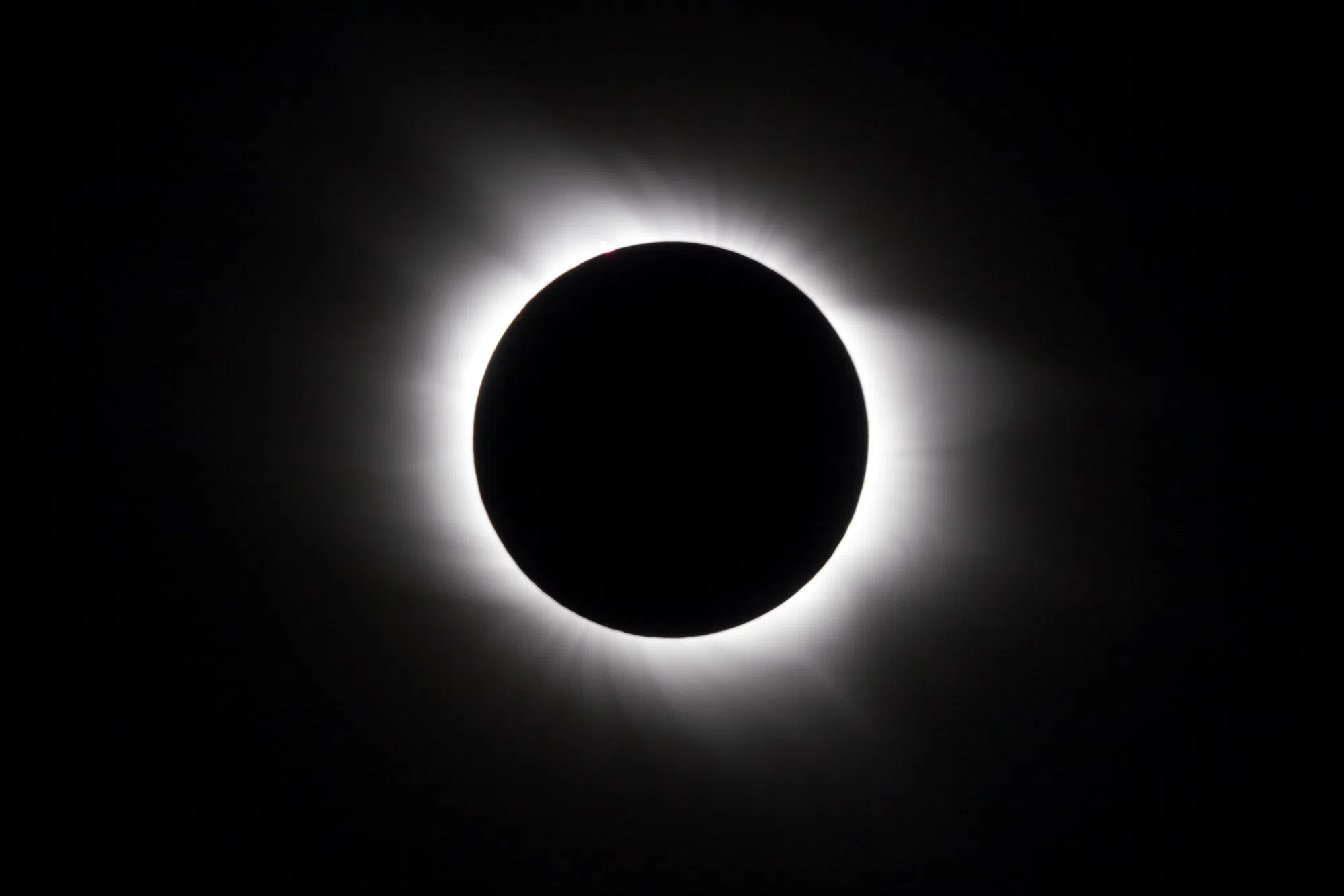
KEARNEY — A total solar eclipse will occur on April 8, with central Nebraska experiencing around 75 percent of the event.
The path of totality is to the south and will pass over cities like Austin, Texas, Little Rock, Ark., and near Indianapolis, Ill., Cleveland, Ohio and Buffalo, N.Y. This is the last total eclipse that will be visible from the United States until Aug. 23, 2044.
Locally, the partial eclipse will begin around 12:35 p.m., the peak will be just before 2 p.m. and it will end around 3 p.m.
The last total solar eclipse in the area was Aug. 21, 2017.
Even when watching a partial eclipse, you must look through safe solar viewing glasses or a safe handheld solar viewer.
“It is not safe to look at the partially eclipsed sun through a camera lens, telescope, binoculars, sunglasses, or any other optical device even while wearing eclipse glasses, as the concentrated solar rays will burn through the filter and cause serious eye injury,” per the National Weather Service.
Research has shown that temperatures can drop between four to ten degrees Fahrenheit during the eclipse, depending on totality of coverage. In addition, some reduction in wind speed and low-level clouds are possible, according to the NWS.
During the eclipse, the sky will get dark as if it were dawn or dusk. Even if skies are cloudy, people will still notice a darkening of the sky. Nocturnal wildlife may awaken while non-nocturnal wildlife may think it’s time for bed.