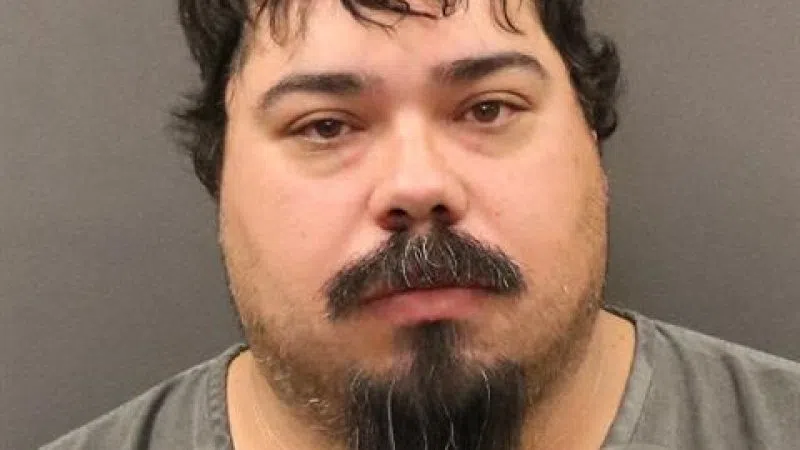
Regional Planning Director Chad Nabity (Courtesy photo)
NOTE: This is the first of three stories that will be published regarding Woodsonia Real Estate’s presentation about its Good Life District plan at the Nov. 12 Grand Island City Council meeting.
GRAND ISLAND – Regional Planning Director Chad Nabity wrote a three-page memo to the Grand Island City Council summarizing Woodsonia Real Estate’s plans for developing Veteran’s Village in north Grand Island as part of the city’s Good Life District program.
In the City Council packet for its Nov. 12 meeting, Nabity’s memo is followed by a 60-page executive summary from Woodsonia Real Estate and Woodsonia’s revised Good Life District plan, approximately a 550-page document.
The development is south of Airport Road/U.S. Highway 281 between Broadwell Avenue and Webb Road and includes Eagle Scout Lake. Estimated cost for Woodsonia’s development is $598 million, according to Regional Planning Director Chad Nabity.
Drew Snyder, president of Woodsonia Real Estate, and Mitch Hohlen, director of development and a partner in the company, gave the presentation to the City Council at the Nov. 12 meeting.
According to a memo to the City Council from Regional Planning Director Chad Nabity:
The project’s purpose and goals are based on the Veteran’s Legacy Project Master Plan presented to the City Council in 2018. The proposed site plan is also similar to the Good Life District Master Plan presented to the City Council by Confluence on Feb. 11.
The major components of the plan include Sports Complex and Fields, Aquatic Center, expanded sports fields, expanded Eagle Scout Lake and bike trails, an amphitheater, an approximate 10-acre space for an elementary school, a hotel, venue event center, restaurant, and other services. Apartments and single-family homes are also part of the plan. The application proposes that Woodsonia construct all components of the plan except for the Aquatic Center.
The plan also includes a proposed fieldhouse, so space for it is reserved, Nabity wrote. The proposed project phasing would begin in December 2025 and will continue until it is fully developed 30 years from now in 2055. Good Life District funding is for 30 years.
The current taxable sales within the Good Life District are approximately $26 million Woodsonia is estimating that upon project stabilization, taxable sales within the Good Life District will increase by $286 million for a total taxable sales of $546 million annually.
Nabity wrote that one of the key issues that will need to be resolved is the use of program funds for non-revenue producing portions of the project. This would primarily apply to Good Life District funds used to construct housing within the Good Life District.
A second issue that created some confusion among staff was where to measure the impact of the transformational project, specifically the Sports Complex, but ultimately the full mixed use development, Nabity wrote.
One concern is the relocation schedule of the existing soccer fields. The existing fields cannot be disturbed until replacement fields are ready for play, Nabity wrote. The draft site plan shows more soccer fields than what current exist, Nabity wrote.
There is an existing fiber optic line managed by AT&T that crosses property just south of the existing Eagle Scout Lake. The line needs to be moved because of planned ground grading plan, expansion of the lake, and overall development. It is estimated that it would take between 36 weeks and 48 weeks to get the necessary fiber and move the line, Nabity wrote.
A traffic study will be required, and Woodsonia has said that it has engaged Olsson Associates to provide the study to the Grand Island Public Works Department and the City Engineer.
The executive summary indicates that Woodsonia is requesting transfer of property in one conveyance for $1. The summary also lists “claw backs” of what would happen with the land and Good Life District funding if Woodsonia fails to perform as promised, Nabity wrote.
“Staff believes it is likely that the transfer of land will have to be done in phases,” Nabity wrote.
An unresolved issue is the ongoing maintenance and capital improvements of city-owned buildings and facilities including the Sports Complex, Aquatic Center, and Field House.